





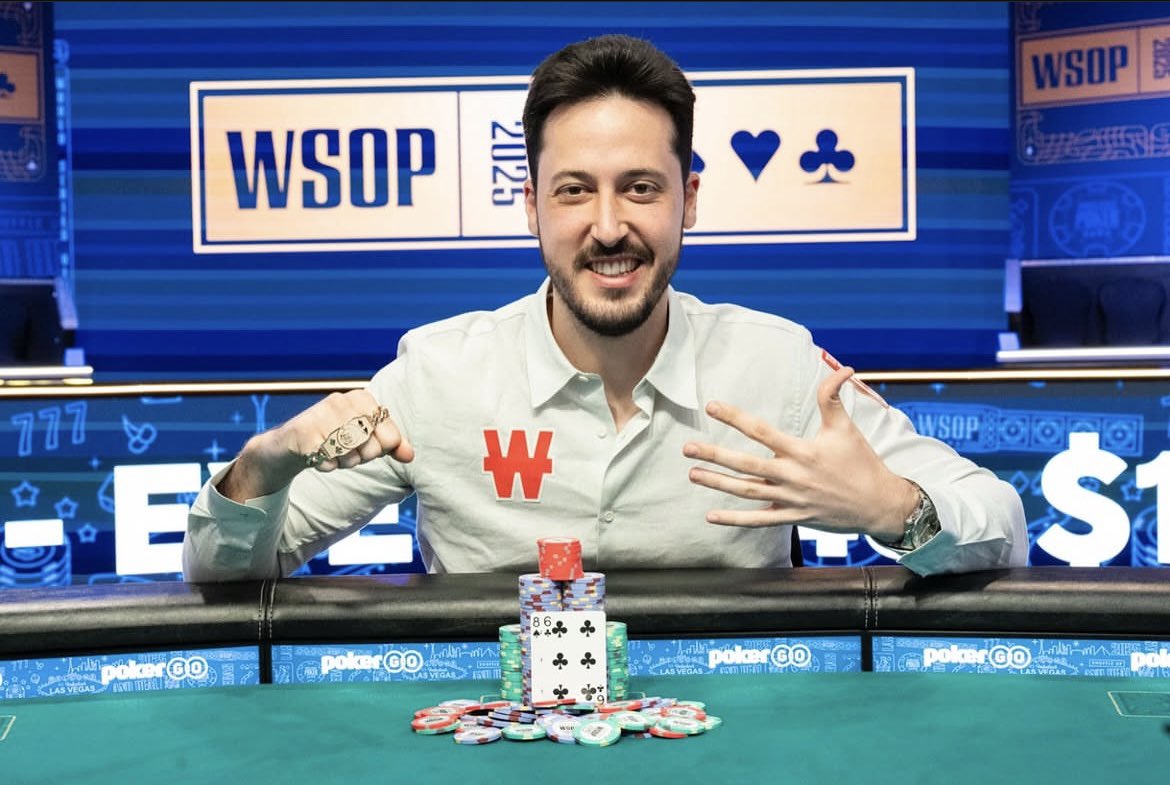
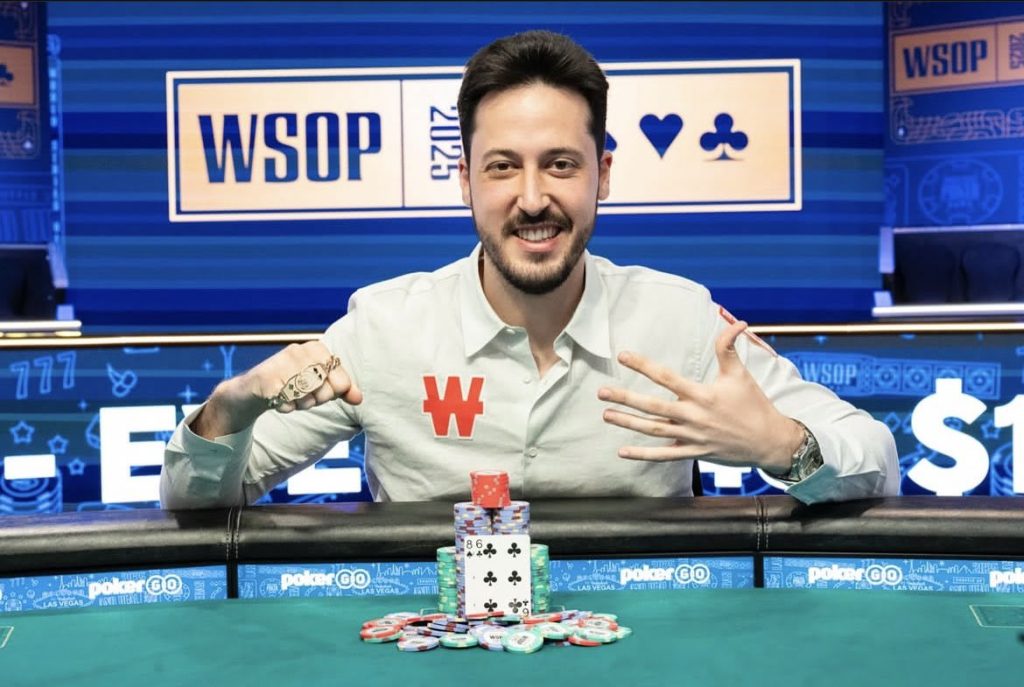
(Image: PokerNews/Reproduction)
In a conversation with Gustavo Martinez
“Poker is a brutal school for learning risk management,” he stated. And he didn’t say it as a metaphor. For the Spaniard, the pressure, uncertainty, and variance experienced on the professional circuit are the best possible training to understand how capital works in the real world. The advantage lies not in winning a hand, but in learning to make better decisions than others.
“In poker, you don’t control the outcome, only your decision”
Mateos went straight to the heart of the parallel between poker and investment. “In poker, you can’t control whether you win or lose a hand. The only thing you can control is whether the decision you made was the right one.” That seemingly simple distinction completely changes how success is evaluated. Separating decision from outcome is the foundation of his professional philosophy.
In his analysis, many people make a structural mistake in business: they judge the quality of a strategy by its immediate outcome. An investment can go wrong even if it was well-planned, just as a perfectly played hand can end in defeat. “You can make a perfect play and lose. That doesn’t make it a bad decision,” he explained.
The problem arises when emotion interferes with the process. “If you become obsessed with the immediate outcome, you become emotional. And when you become emotional, you start making mistakes.” Emotional control is not a secondary virtue; it is the professional player’s central tool.
Mateos understands that both at a final table and in a significant investment, there is external noise: pressure, expectations, opinions of others. Poker training consists of isolating that noise and focusing on the quality of the analysis. He applies the same logic off the tables.
“Variance is part of the journey”
Another concept he developed clearly was variance, one of the pillars of professional poker. “In poker, you can do everything right and still lose for months. That forces you to think long-term,” he maintained.
In his view, the long term is not a motivational phrase but a mathematical structure. Thinking in large samples is what allows the process to overcome chance. Mateos explained that in the business world, people often seek absolute certainty, something that simply doesn’t exist. “There is no perfect investment, just as there is no perfect hand. You always work with probabilities,” he pointed out.
Read also: Nino Pansier Won The Onyx HRS PLO Main Event — CodigoPoker
That probabilistic mindset allows him to accept negative scenarios without losing strategic coherence. “There are good decisions that turn out badly and bad decisions that turn out well. The important thing is that, on average, your process is solid.” Consistency is not built on an isolated operation but on the disciplined repetition of correct decisions.
Accepting variance does not mean resigning oneself, but understanding that real performance can only be measured over time. That patience is, according to him, one of the great differentiators that poker has given him for navigating the business world.
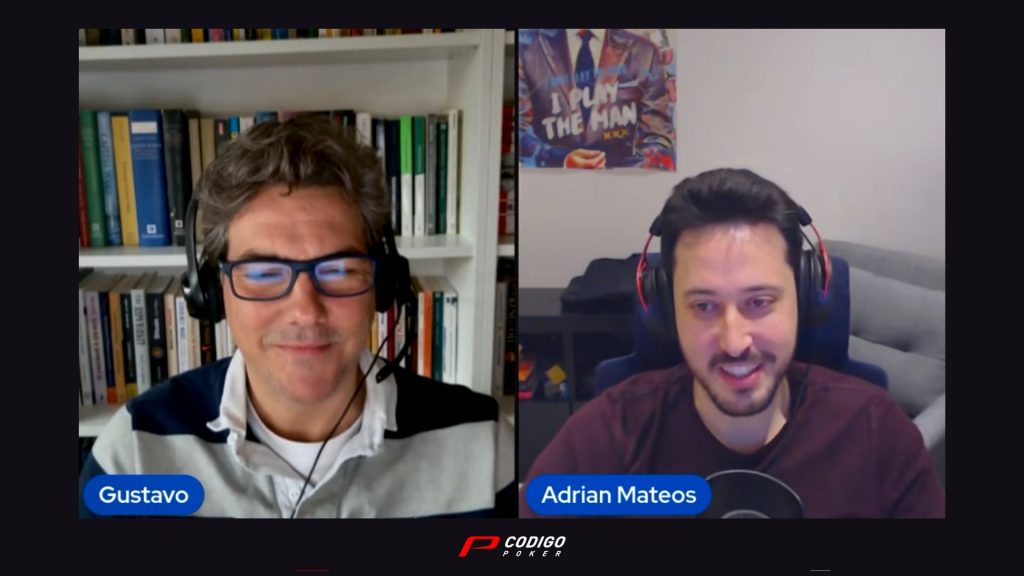
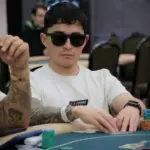
Gustavo and Mateos Chatting About Poker and Business.
“It all comes down to repeating good decisions”
In the final part of the conversation with Martinez, Mateos summarized his philosophy in a phrase as simple as it is powerful: “It all comes down to consistently making good decisions.”
For the Spanish champion, whether in an international tournament or a million-dollar investment, the differentiator is not a stroke of luck but the mental structure that allows the same process to be executed time and time again. Discipline is more important than inspiration.
He also spoke about the famous “mental reset,” a key skill in elite poker. “When you’re playing for millions, you can’t let a bad hand affect the next decision. It’s the same in business,” he explained.
That ability to start over after a loss, to not emotionally carry forward a previous mistake, is one of the most transferable skills from poker to the business world. Separating emotion from strategy, accepting uncertainty, and trusting the process.
Thinking like a player, investing like a businessman – for Adrián Mateos, these are not separate worlds. They are two scenarios where the one who decides best wins.
Read also: Papo MC Reveals The Reason Why He Left PokerStars