





Poker has always been a game of cards, probabilities, and strategy, but in 2026 the most costly battle is fought on another terrain: the mind. This is according to former Wall Street operator, organizational psychologist, and player Paul Gibbons
With almost a million dollars in live cashes and a career dedicated to the study of decision-making under pressure, Gibbons describes the case of two friends who started practically on equal terms: same coach, same bankroll, and the same ambition. Today, however, one plays US$10,000 tournaments, while the other remains stuck in the lowest limits.
The difference, explains the author, is not in talent, but in the questions they ask after each session. The winning player analyzes bet sizes, strategic lines, and bluff frequencies. The other only shares bad beats, coolers, and hands where “luck abandoned him.” For Gibbons, that difference reveals who is looking to improve and who is merely seeking to justify their results.
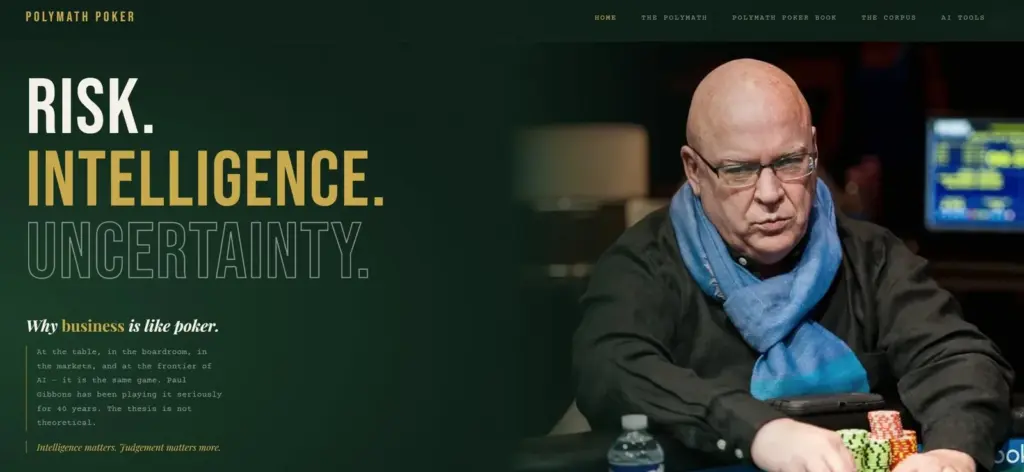
You can see more about this topic at This Link.
A reflection with a Latin perspective
Today there are databases, tracking software, EV metrics, and solvers that allow evaluating a decision independently of the final outcome. However, many players still analyze their performance solely based on whether they won or lost the hand.
Read more Carlos Serrano avanzó entre los mejores del Invitational de BSOP Winter — CodigoPoker
Gibbons, citing the concept of “result” popularized by player and writer Annie Duke
The author argues that ego costs twice: it prevents detecting real leaks by attributing losses exclusively to variance and, at the same time, consolidates errors when bad decisions end with chips in the stack.
His conclusion invites us to rethink the way the game is studied. More than developing humility as a personality trait, he proposes turning it into a procedure. Reviewing winning hands with the same rigor as losing ones and asking whether one is seeking to learn or simply receive approval can make the difference between stagnating in the micros or competing on the big stages.
The most expensive seat at the table does not always belong to the strongest opponent, but to one’s own ego when it takes control of decisions.
Read more BCPoker lanza Clubs: así puedes crear tu propio Home Game


