








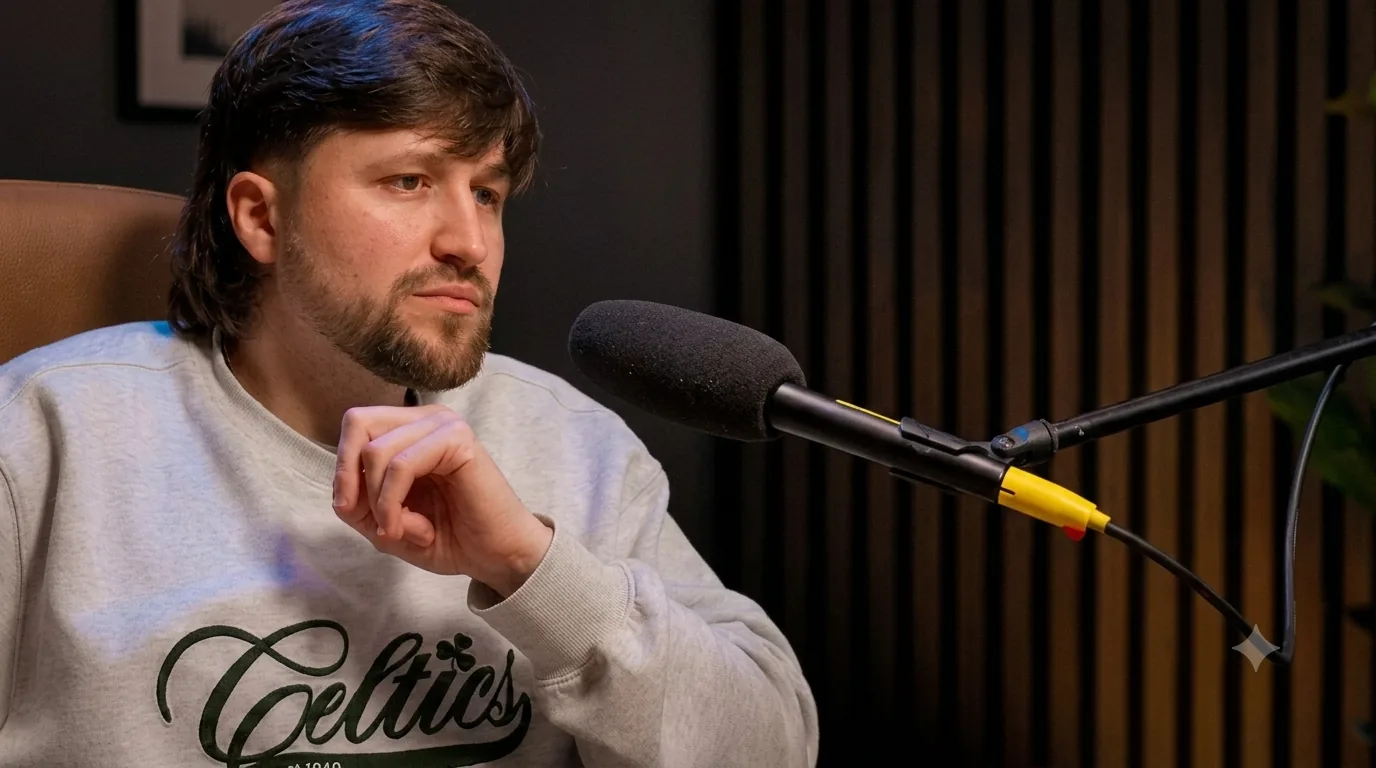
Marcos Luján
The Modo Fortuna channel has an unconventional approach in the world of content aimed at business and personal finance, as it delves into the real, mathematical, and emotional dynamics that move money in the 21st century
The conversation, directly led by David Llano
“I would have said yes before, today I think no”
When directly asked if anyone can play poker professionally, Luján was blunt: for years he thought yes, but today he is convinced that not everyone is made for this. It is not, he explained, a matter of intelligence, but the combination of emotional and financial demands that the career requires. Being technically good, he said, is not enough if you cannot sustain that demand in practice.
-The brain is not prepared for poker
One of the central themes of the conversation was the emotional component of the game. Luján explained that the human mind is not designed to tolerate sustained streaks of bad luck, something poker causes all the time: favorable situations 80% of the time can fail several times in a row without contradicting the long-term statistics. For him, this mismatch between what the brain expects and what the game delivers is the basis of the real difficulty of the craft.
-The emotional component weighs more than the technical
The player estimated that between 75% and 80% of poker performance depends on emotional management, not mathematical or strategic knowledge. He explained that a player can have an excellent technical level, but if their mindset is not in shape, that knowledge becomes useless at the table.
-The bankroll and finances, a pillar as important as the emotional
Luján was emphatic that financial management is crucial to sustain a career: without managing the bankroll well, he said, no career works, no matter how technically good the player is.
Read more Sebastián Fonseca fought at the Mini Championship Final Table — CodigoPoker
The business: real figures and the average trap
When talking about numbers, Luján placed the earnings of a broad group of profitable players in a range between US$15,000 and US$30,000 monthly, although he clarified that these figures hide enormous variability: the same player can earn US$80,000 in one month and lose between US$20,000 and US$30,000 the next.
-The power law distorts what is seen from the outside
The player used the concept of power law (according to which outlier values skew any average) to explain why early success stories do not represent the norm. Just as happens on social media or in business, extreme cases of players who “make it big” at 22 distort the general perception of what an average player earns.
-The poker prime comes much later than in other sports
Unlike football or basketball, where peak performance usually occurs between 20 and 25 years old, Luján stated that in poker the best moment of a player can come only at 35 or 40 years old, linking it directly to the accumulated experience in emotional management. As a fun fact, he noted that much of the world poker elite has remained the same for more than a decade, something unusual in high-performance sports.
The “rat race” and the cost of not knowing if it’s worth continuing
Luján introduced a concept he uses with his close circle: the “rat race,” referring to players who have been in the circuit for years without taking off financially. He acknowledged that he himself went through moments of deep doubt about whether he was cut out for this, especially during stages of financial and emotional loss of control, and that getting out of those cycles is one of the hardest parts of the craft.
A routine that demands more discipline than it appears
Far from the image of total freedom often associated with poker, Luján described a structured routine: one hour of study before each session, brief meditation, three hours of play, gym, and a second session of another three hours, totaling around six hours of daily play, above the average he himself estimates at about four hours for the standard player. He also emphasized the importance of Sundays, the day when the largest number of recreational players concentrate and, therefore, the greatest potential profitability for a professional.
“I think not everyone is cut out for everything. You need to understand what is needed emotionally and what is needed financially. Because if you don’t understand that and don’t put it into practice, you can be very technical, very intelligent, whatever you want, but no, no,” Luján concluded.
Read more La Armada closed with two runner-up finishes their performance at the BSOP Winter — CodigoPoker