


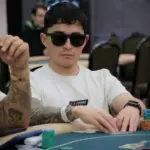


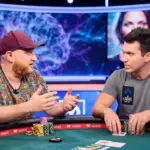


Alex Foxen
Alex Foxen

Foxen reached the river with A 5 and faced a gigantic bet from Chidwick. The Brit decided to turn his hand into a bluff and made an overbet of 153% of the pot, a bet designed to put the opponent to a decision for their entire stack.
Foxen, far from folding, called. And that’s where the discussion began: had he found an extraordinary read on one of the best players in the world or had he simply made an overly optimistic call?
The solver sided with Chidwick
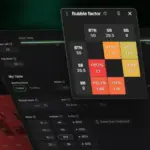
The subsequent analysis done with GTO Wizard added even more interest to the hand. According to the solver, the line chosen by Chidwick made sense. In fact, when deciding to turn that hand into a bluff, the 153% pot-sized bet is exactly the type of bet theory considers appropriate.
There was even an alternative with higher expected value: controlling the pot by checking. But if the decision was to bet, the overbet used by Chidwick fit perfectly within the optimal strategy.
The problem appeared on the other side of the table. With A 5, Foxen should fold most of the time against a perfectly balanced constructed range. But Foxen was not facing an abstract range, he was facing Stephen Chidwick.
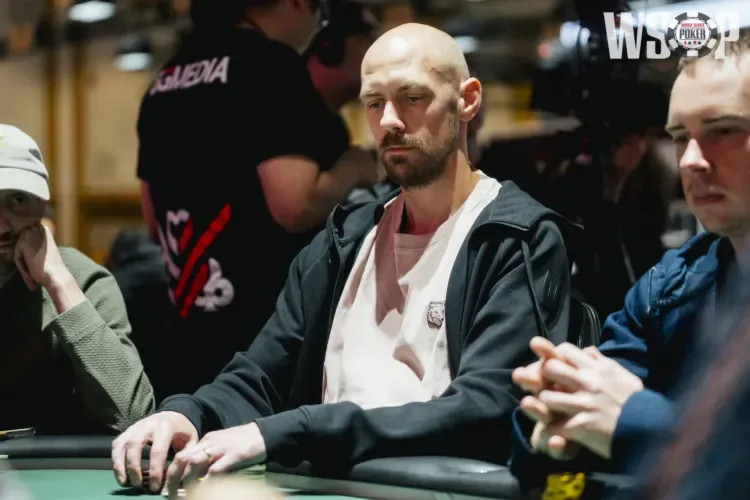
Stephen Chidwick.
And that difference ended up being decisive.
The peculiarity of the hand lies precisely in the fact that Foxen’s decision departs from what theory recommends. The solver considers that Foxen’s A-5 should fold to that bet in most scenarios. However, the American found enough reasons to interpret that Chidwick could be trying to represent an extremely strong hand with a bluff.
The result was a hero call that became one of the most striking decisions of that WSOP edition.
The hand also shows one of the big differences between high-level poker and purely GTO-based play: a mathematically optimal strategy can change when a player has specific information about the opponent that the solver does not consider.
Against an anonymous player, folding might be the correct decision. Against one of the best specialists in the world, Foxen decided to trust his read.
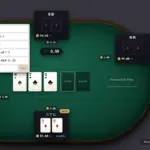
Here is the full hand
The action took place during Day 1 of the $250,000 Super High Roller at the 2026 WSOP, with blinds at 6,000/12,000 and an ante of 12,000.
Read more Carlos Ribeiro won the GGMillion$ High Rollers full of Brazilians — CodigoPoker
Chidwick started the hand with approximately 2,500,000 chips and received A 10 in the hijack and opened to 28,000. In the cutoff was Foxen, with about 2,100,000 chips and A 5 to raise the bet to 100,000.
Chidwick called and both went to the flop, which showed K Q 5 giving Foxen a pair of fives, while Chidwick had only ace high.
Chidwick checked and Foxen bet 57,000 chips into a pot of 230,000, about a quarter of the pot. Chidwick decided to call, making the pot 344,000 chips.
On the turn, a Q paired the board. Chidwick checked again and Foxen decided not to bet. The American checked behind and both went to the river.
The decision made sense: with A 5, Foxen had a low pair and there was not much value to extract with a second bet on a now paired board.
The 7 completed the board. Foxen still had his small pair and Chidwick, on the other hand, only held his Ace.
And then came the play that made the hand one of the most striking of the WSOP.
Chidwick bet 525,000 chips into a pot of 344,000. It was a huge overbet that put Foxen to a decision for a massive amount.
The American took a long time to think and, when most would have folded, he finally called.
The hero call worked and Foxen took down a pot of 1,394,000 chips. And with an incredible hand to tell…
Read more From $0.01: ways to qualify for the Venom at ACR Poker