








It happens at all levels of poker. You study a situation, review ranges, analyze the spot, and you know perfectly well what the correct decision is. However, when it comes time to act, you do exactly the opposite. Lack of discipline? Impulsiveness? According to performance psychologist Alan Longo
Action mode
Longo, who works with professional players, argues that most mistakes are not explained by a supposed lack of self-control, but by a phenomenon known as activation. It is a state in which the body enters “action mode”: heart rate increases, breathing accelerates, and the mind seeks to solve the problem as soon as possible.
“You didn’t forget the theory; simply acting immediately felt more urgent than making the right decision,” explains the specialist in a column published in Poker Org.
This state often appears after suffering a bad beat, after several hours of session, or when losses begin to accumulate. At those moments, patience disappears and the brain prioritizes reacting over thinking.
Am I impulsive?
One of the most interesting points Longo raises is that players often mislabel themselves. “Saying ‘I am impulsive’ is too broad a description. You are not impulsive; you have impulsive moments,” he states. The difference seems subtle, but it completely changes how to work on the problem.
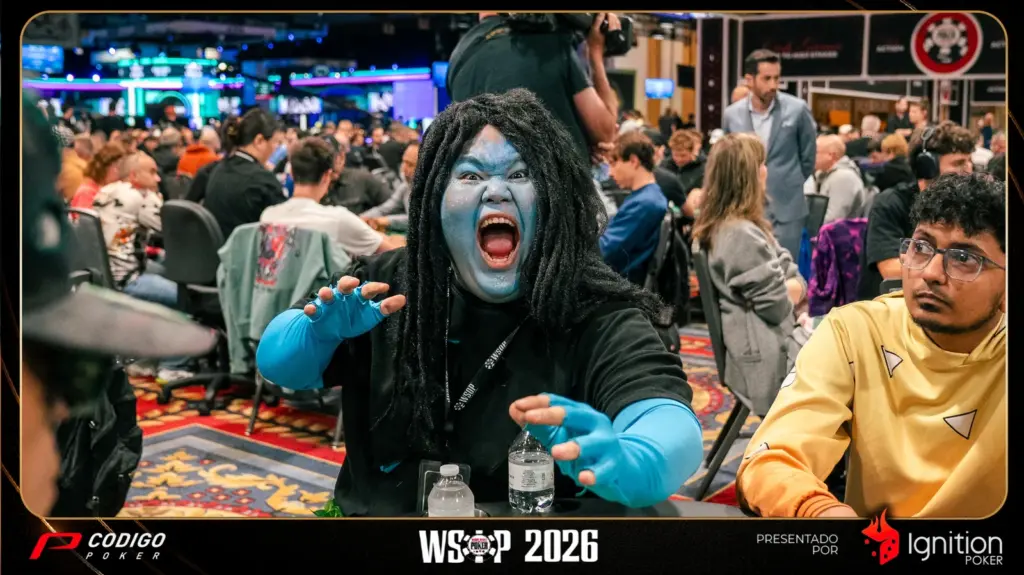
Self-control is part of a good mindset.
The author also distinguishes two situations that are often confused. The first is playing badly due to emotional activation. The second is chasing immediate results, such as moving up stakes to recover losses that same night. From the outside, both behaviors seem the same, but they require different solutions.
In the first case, studying more strategy will not help much. The important thing is to learn to recognize when that emotional state appears. In the second, the key is to respect rules defined before sitting down to play: loss limits, session duration, or allowed stakes.
A practical exercise
To find out which of the two scenarios occurs more frequently, Longo proposes a simple exercise. For a week, note every time the urge to act quickly appears: how long you had been playing, what happened in the previous hands, whether you were winning or losing, and what your level of activation was.
“Do not record the result of the hand; record the impulse,” he recommends. Only after several days will it be possible to identify real patterns and stop judging yourself by a label.
The final message is: instead of repeating “I am impulsive,” it is better to observe when those moments appear. Because, many times, the problem is not in the player, but in the mental state from which they are making their decisions.
Read more Poker changes its rules: the news from the TDA Summit 2026 — CodigoPoker