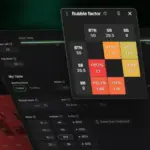



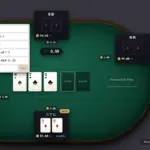







There are 14 players left, the prize jumps start to matter, and you receive A-J offsuit on the button. You make a 3-bet and the opponent responds with an all-in. You cover it, though barely. Do you call? Do you fold? Was the mistake even earlier and you should have just called?
It is precisely in situations like this where ICM (Independent Chip Model) stops being a theoretical definition and starts directly affecting your wallet.
With that premise, Alex Theologis
Theologis speaks from experience. The professional has accumulated over US$30 million in winnings, as well as a WSOP bracelet and an EPT title, and much of his career has been spent facing final tables and huge prize jumps.
The real value of chips
The fundamental idea of ICM is relatively simple: a chip does not always maintain the same monetary value during a tournament. Factors such as stacks, prizes, remaining players, and elimination risk can radically transform a decision that under chipEV would be correct.
Read more UFC, NBA and Hollywood meet in an explosive night of poker — CodigoPoker
According to Theologis, many players know the general rules: the short stack must protect itself more, the big stack can apply pressure, and survival has value. The problem arises when a real situation does not match the studied table.

You Can Review This Interesting Work About ICM At This Link.
There lies the difference between memorizing and understanding. Alex aims to provide a framework to find answers, relying on real hands, modern tools, Future Game Simulation, and an HRC tutorial.
Additionally, he delves into a historically less studied area: postflop ICM.
Because the effect of the model does not end when the flop appears. The risk premiums also modify frequencies of continuation bet, check-raise, bluff, and bluff-catching. To address this universe, Theologis dedicates more than 10 hours exclusively to postflop play under ICM pressure.
The final lesson seems simple but has considerable depth: in 2026 knowing that ICM exists no longer provides an advantage. Understanding why a decision changes can.
Read more Bryn Kenney, the 90M man: «I don’t want to study, I play differently» — CodigoPoker