







In poker, a glance can be worth millions. An involuntary movement, a pause before betting, or the way of handling chips can reveal more than a player would like. For years, detecting those small details was one of the great skills of professionals like Daniel Negreanu
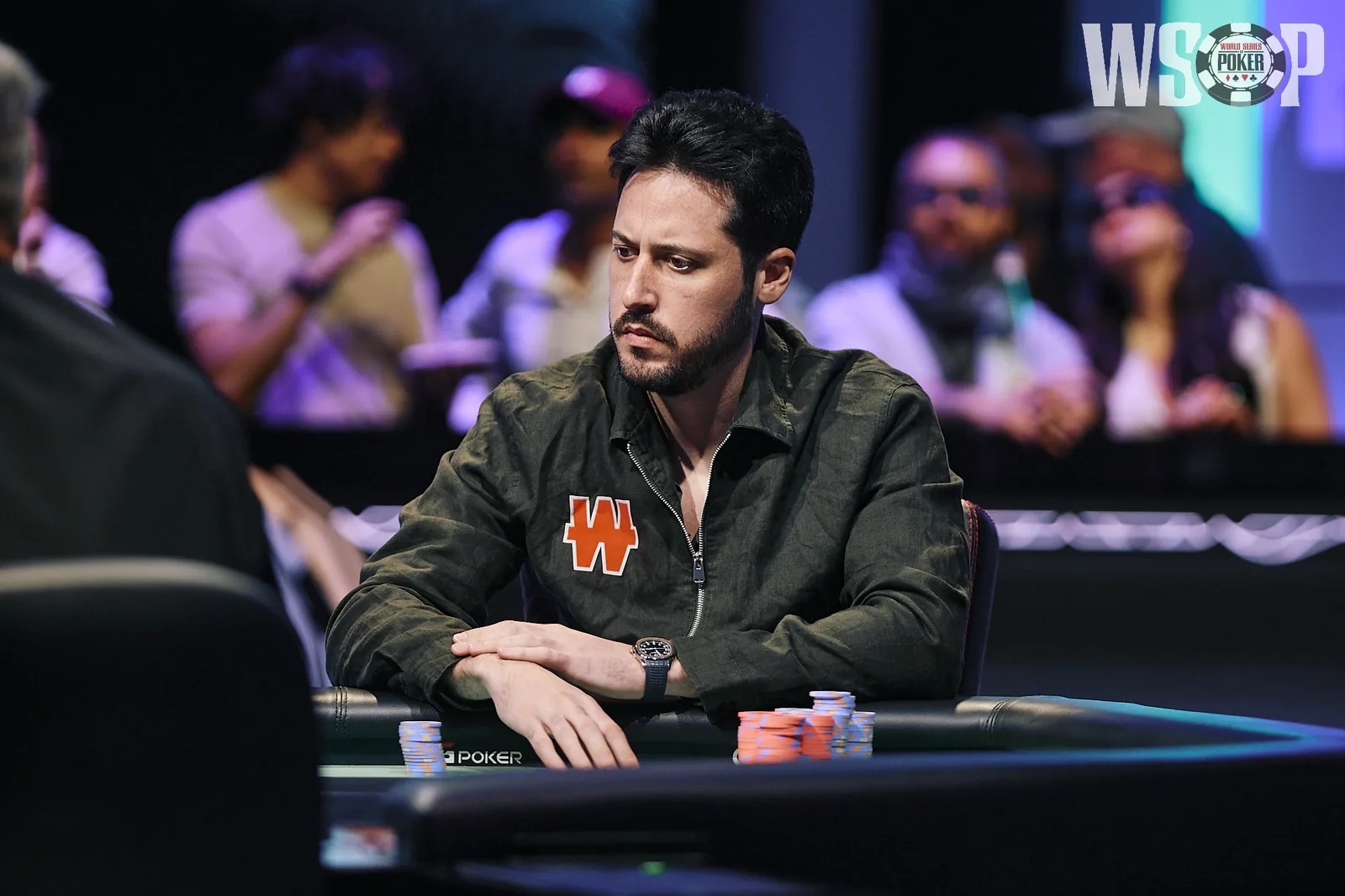
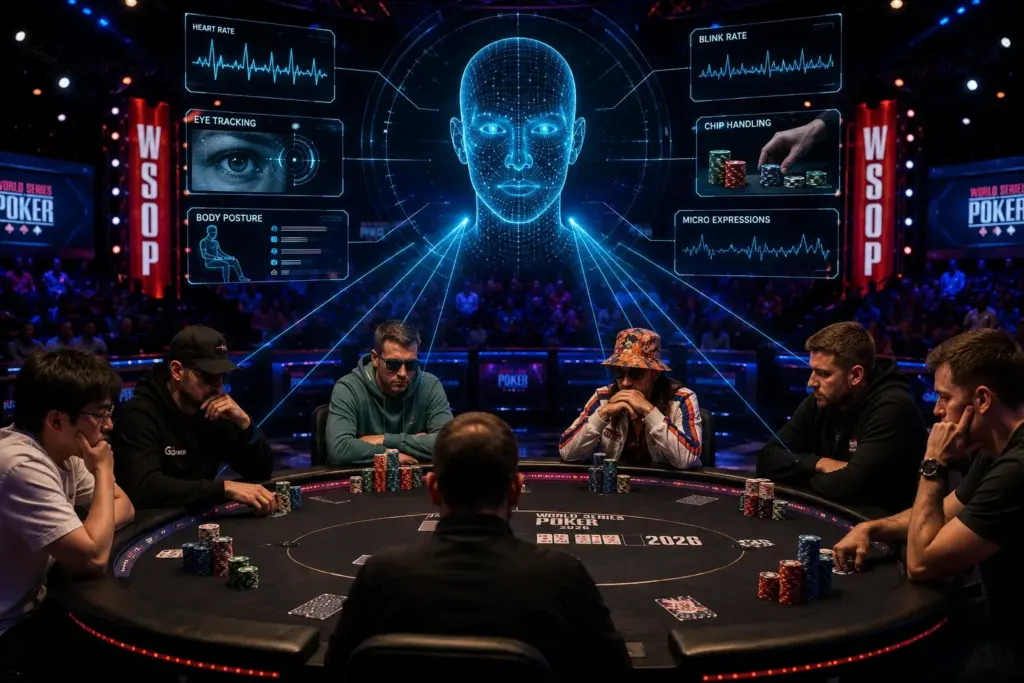
During the coverage of the World Series of Poker, ESPN presented a technology capable of analyzing players’ body language and trying to determine what lies behind their actions at the table.
The system, known as AI tells detection, uses computer vision to study different signals: eye movements, blink frequency, body posture, gestures, and even the way a player manipulates their chips.
The idea is simple to explain, although much more complex to execute: to look for patterns that may indicate if a player is strong, weak, or trying to deceive their opponents.
A machine looking for bluff at the WSOP
AI cannot see the hidden cards nor does it know for sure what hand a player has. What it does is observe their behavior and find signals that, combined with other data, may be related to certain situations. It is somewhat similar to what the best specialists in “tells” do, but taken to the realm of algorithms.
The problem is that professional poker is full of players who perfectly understand the importance of their body language. Some train to maintain virtually identical behavior regardless of the cards they hold. Others even use deliberate movements to induce their opponents to make mistakes.

This Technology Was Used At The WSOP.
Therefore, for an AI to detect a certain pattern in a player’s behavior does not necessarily mean it has discovered the truth. The same reaction can have different interpretations and, in a game as complex as poker, an isolated body signal is hardly enough to determine if someone is bluffing or has a strong hand. Moreover, professionals are increasingly aware of these resources and work to control their movements and expressions at the table.
Read more Ki Joo Park secured the lead on Day 1C at the Jubilee Opener — CodigoPoker
From the human eye to the algorithm
The arrival of this technology represents a new step in the relationship between poker and artificial intelligence. The game had already been used as a true testing ground to develop systems capable of making decisions with incomplete information. Programs like Libratus and Pluribus successfully faced professional players in No-Limit Hold’em games and demonstrated how far a machine could go in analyzing strategies and making decisions.

But in this case, the goal is different. The machine is not playing the cards nor making decisions for the player: it is watching the player. The system tries to find small variations in behavior, from an eye movement to a change in posture or the way chips are handled, that may have some relation to the strength of the hand.
Here appears a possibility that until recently seemed more like science fiction: that a computer could detect a small body movement that a human opponent would never have noticed. The difference lies in the ability to process enormous amounts of information and compare behaviors to find patterns that can go completely unnoticed by the human eye.
Will the next opponent be a computer?
For now, the tool is used as part of the television broadcast and functions as an analysis and entertainment resource for WSOP viewers. It is not a technology that players are directly using at the table to make their decisions, but its appearance raises a discussion that will surely gain importance as artificial intelligence advances.
If an AI can analyze thousands of movements and find correlations that humans do not see, the question is inevitable: could it one day become a tool used directly by players to try to decipher their opponents? And, above all, what would happen if a machine managed to detect a professional’s bluff with greater accuracy than any other player at the table?
Poker has always been a game where reading the opponent can make the difference between winning and losing a hand. Now, besides trying to discover what the person opposite is thinking, players might have to worry about something much harder to deceive: a machine capable of observing them, analyzing every move, and looking for clues they don’t even know they are giving away.
Read more Historic Sunday at ACR Poker with US$20 million on 8/16