




Poker and trading may seem like two completely different activities, but they share a fundamental characteristic: they force you to make decisions under uncertainty. Analyzing scenarios, managing capital, and controlling emotions are skills that can be decisive both at the table and in front of financial markets.
Don’t have an account with ATFX yet? Create one right now from this link
This meeting point frames the alliance between CodigoPoker and ATFX, which seeks to bring the world of trading closer to a community used to thinking in terms of risk, probabilities, and strategy. That’s why here we present a note focused on them. Or, rather, you…
Making decisions without knowing the outcome
A professional player never knows what cards their opponent will have nor what the next one will be. What they can do is analyze probabilities, calculate scenarios, and determine if a decision has expected value.
Something similar happens in the markets. A trader also cannot know for sure what an asset’s price will do. Their task is to analyze information, evaluate scenarios, and manage risk before taking a position.
The difference is important: poker and markets are not the same, but they share a certain way of facing uncertainty.
Risk management is fundamental
For a professional player, properly managing the bankroll is as important as knowing the game strategy.
Risking too much in a single session can compromise all their capital. That’s why professionals set limits and think long term.
In trading, there is a similar logic. Defining how much capital you are willing to risk and avoiding excessive exposure are fundamental elements to manage trades.
The premise is simple: it’s not about always being right, but about protecting capital and making good decisions consistently.
From tilt to emotional control
Tilt is one of the great enemies of any poker player.
After a bad hand, frustration can lead to abandoning the strategy and starting to make impulsive decisions. Similar behaviors can also appear in the markets: trading out of fear, getting carried away by euphoria, or trying to quickly recover a loss.
Professionals learn to separate the result from the decision.
A play can be well planned and end in a loss. Likewise, a winning trade does not necessarily mean it was a good decision.
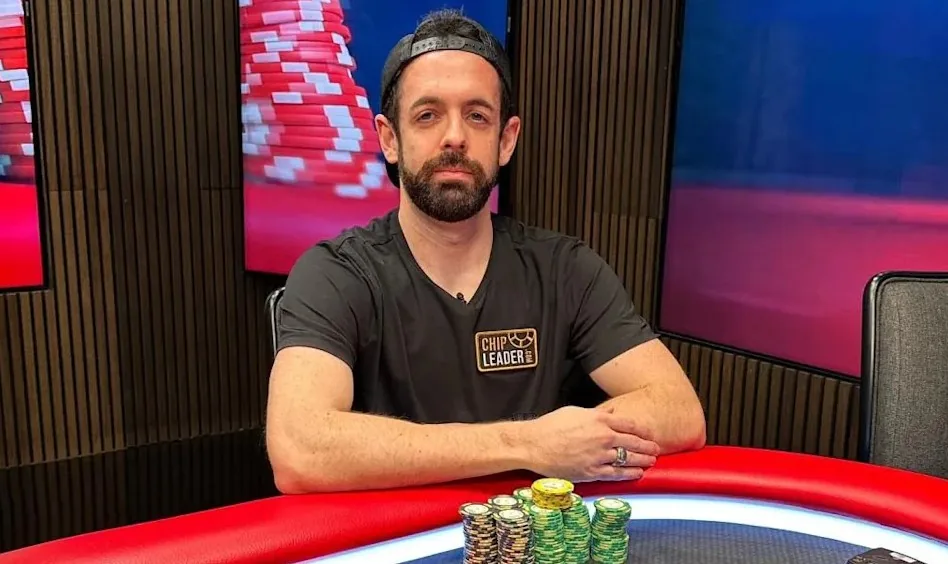
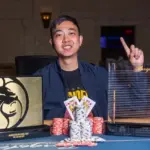
Fedor Holz: from elite poker to investments
Fedor Holz
The German built an extraordinary career in high-stakes poker and accumulated millions of dollars in prizes. Over the years, however, he began to devote more and more attention to business and investments.
Read more 3 rewards available when playing online poker at GGPoker
In 2026, Holz announced his departure as an ambassador for GGPoker to focus on new projects, including the launch of an investment fund.
His journey shows how some of the best players in the world began to transfer their competitive and analytical mindset to other financial areas.

Fedor Holz, The German Prodigy.
Liv Boeree and the importance of probabilities
Liv Boeree
The British player, European Poker Tour champion, has spoken on numerous occasions about the relationship between poker, probabilities, and decision-making.
Her philosophy can be summed up in an idea applicable both at the tables and in the markets: it is not necessary to know the outcome to make a good decision.
The important thing is to analyze the available information, evaluate probabilities, and act according to a strategy.

Liv Boeree, A Brilliant Mind.
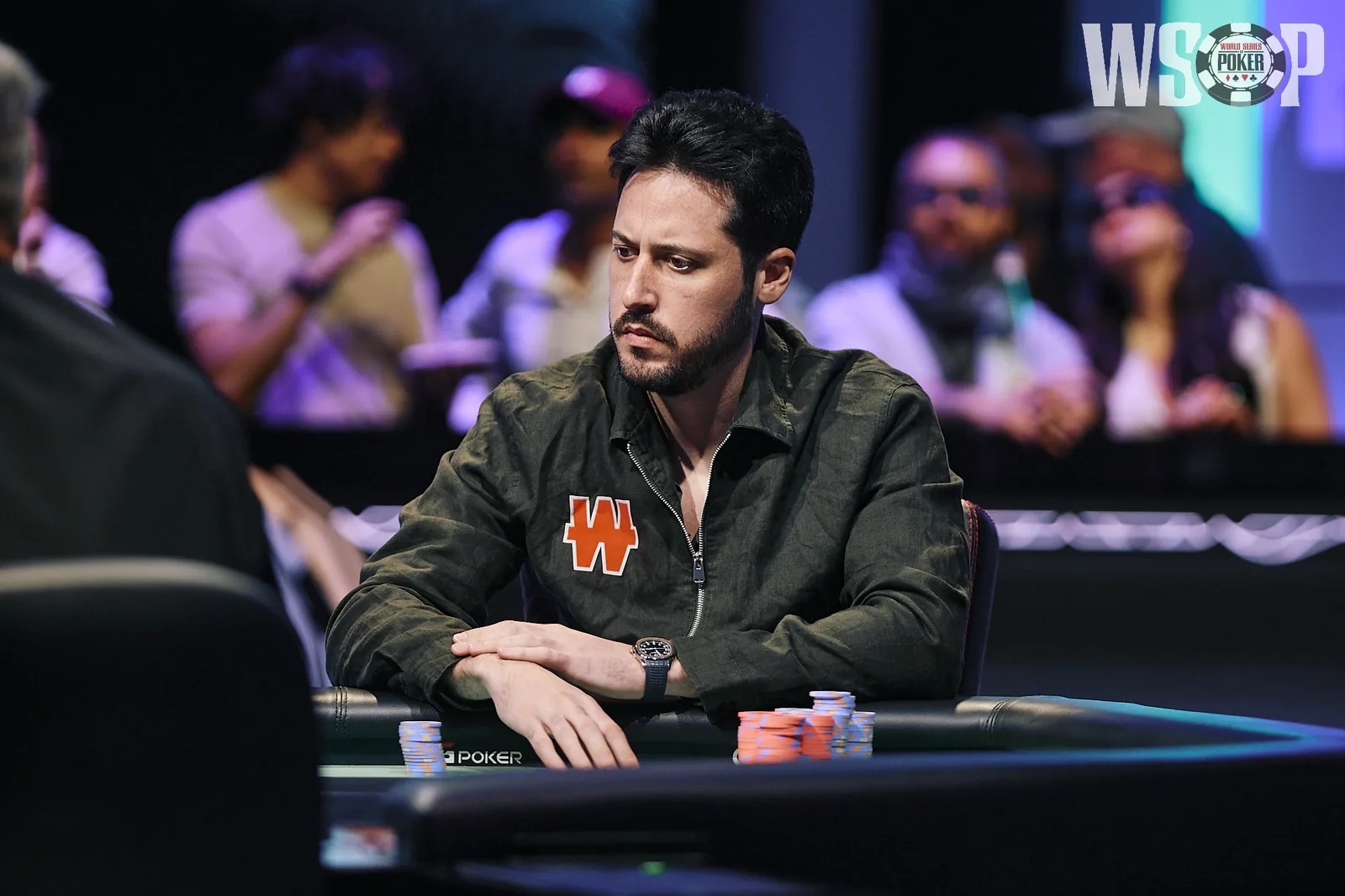
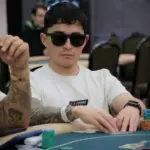
Galen Hall, from poker to Wall Street
The case of Galen Hall
His trajectory is an example of how skills like probabilistic thinking, analysis, and risk management can find applications outside the tables. Two different worlds, a similar mindset.

Galen Hall, His Journey Is An Example.
Poker and trading are not equivalent and present very different risks. But there is an obvious point of contact: both require making decisions when the outcome is uncertain.
For a professional player, that ability to analyze probabilities, manage capital, and maintain discipline can become a useful tool when exploring new grounds.
And perhaps that is the true connection between both worlds: it’s not about guessing what will happen, but about making the best possible decision with the available information.
***
IMPORTANT NOTICE FOR RESIDENTS IN COLOMBIA: In Colombia, AT Global Markets Ltd promotes its products and services through AT Global Markets Ltd Representative Office, an entity supervised by the Financial Superintendence of Colombia. The Representative Office’s exclusive function is the advertising and promotion of the foreign entity’s products and services. The Office does not collect public funds, nor intermediates securities, nor receives money directly in Colombia. All operations and deposits are made directly with AT Global Markets…
Read more PKO Weekend, 2nd stage of the Ignition Poker Championship